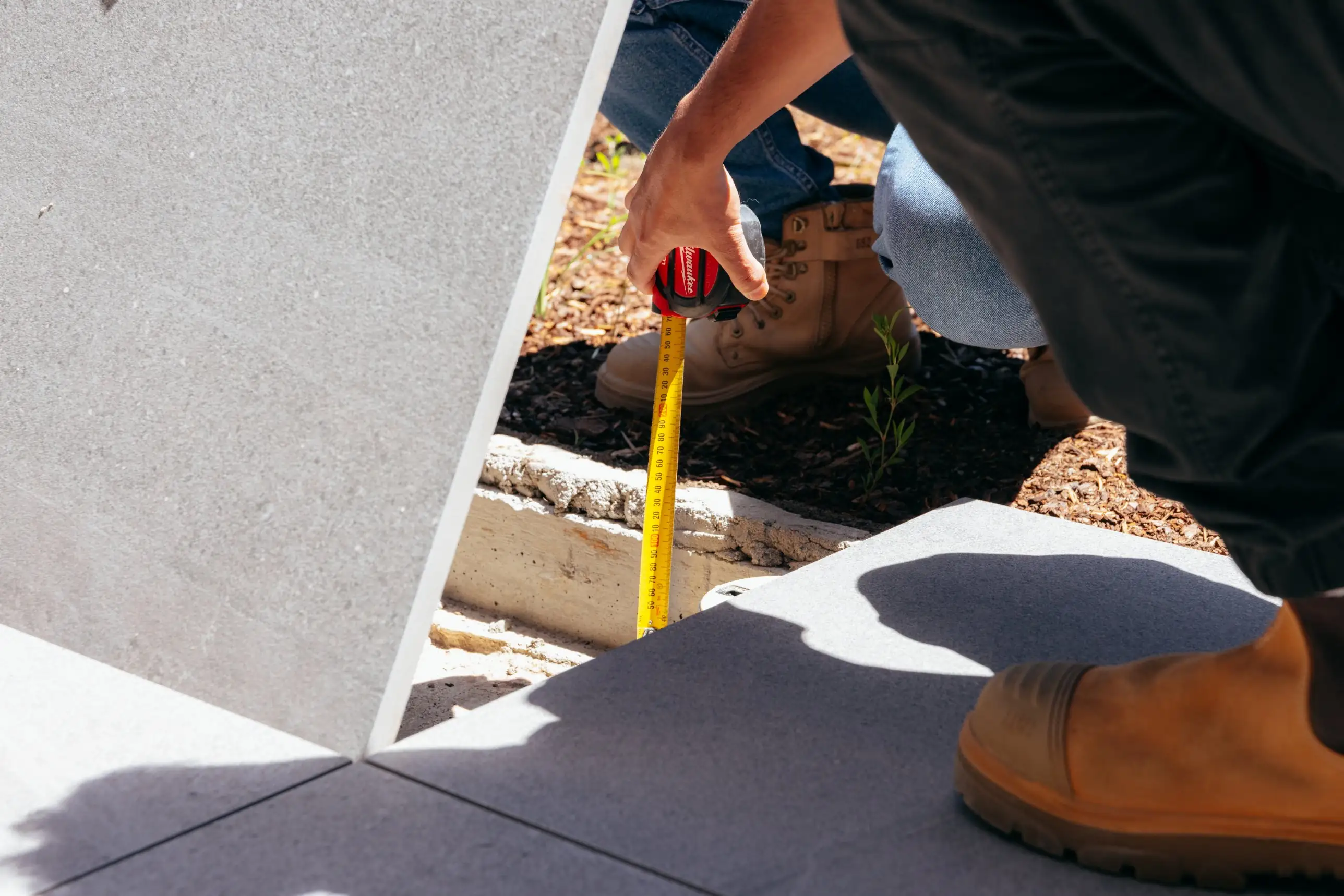
Investigation Before Rectification
Water can travel through roof assemblies, cavities, slabs, screeds, façades, window interfaces, waterproofing systems and building joints before becoming visible internally. Water ingress is often misdiagnosed when repairs are based only on the location of visible staining or the most obvious external defect. Applying sealant or replacing a local finish without understanding the water path can temporarily mask the symptom while leaving the underlying failure unresolved.
Remicon's investigation process progressively narrows the possible sources. We begin with the internal evidence, review the surrounding construction and then test likely external or adjoining sources in a controlled sequence.
Typical investigations can involve:
- Roofs, flashings, skylights and roof penetrations
- Balconies, terraces, podiums and waterproofed areas
- Windows, doors, sills and perimeter interfaces
- Façades, cladding, render and external wall junctions
- Expansion joints, sealant joints and movement interfaces
- Paths, slabs, thresholds and sub-grade interfaces
- Planter boxes and external landscaped interfaces
- Box gutters, outlets and drainage-related interfaces
- Internal walls, ceilings, skirtings and floor finishes affected by moisture
Pre-Test Inspection and Baseline Moisture Readings
Before water is introduced, Remicon documents the existing condition of the affected area. This establishes a baseline against which changes observed during and after testing can be compared.
- Pre-test photographs of internal and external conditions
- Review of reported leak locations and occupant or client observations
- Non-destructive moisture readings to selected internal finishes
- Identification of existing staining, swelling, deterioration or mould-related indicators
- Review of accessible construction details, joints, penetrations and drainage paths
- Assessment of whether destructive opening-up is required to obtain reliable evidence
- Establishment of test zones so potential sources can be assessed independently
Controlled Water Testing
Where visual inspection is not sufficient, Remicon uses controlled water testing to assist in recreating the conditions that may be contributing to water ingress. Testing is planned around the building element being investigated and is generally undertaken progressively so individual sources can be assessed rather than wetting multiple areas at once.
A low-to-high testing sequence is commonly used where appropriate. Lower-level interfaces and isolated details are tested first before progressing upward or outward to additional areas. This reduces cross-contamination between test zones and improves the usefulness of the observations. Water application rates, test duration and observation periods are selected to suit the building element and investigation objective.
Dye testing
Dye testing is particularly useful where several adjacent building elements could be contributing to the same internal leak. Remicon introduces coloured tracer dye into controlled test zones so water observed internally can be associated with the area being tested. Different colours are used during staged testing to distinguish between potential sources such as a balcony surface, wall junction, door threshold, façade interface or adjoining path. Dye testing does not replace assessment of the building construction; it provides another layer of evidence for identifying likely water paths and prioritising rectification.
Flood testing
Flood testing assesses whether water is passing through or around a waterproofing assembly under controlled ponded-water conditions. Remicon undertakes flood testing to balconies, terraces, podium areas and other waterproofed surfaces where the construction, drainage arrangement and site conditions allow. Flood testing is not appropriate for every building or membrane system. Existing construction, drainage capacity, thresholds, loading, membrane condition and the risk of causing additional damage are considered before testing proceeds.
Roof water testing
Metal and low-slope roof leaks can be difficult to identify visually because water may travel beneath flashings, along sheets, over sarking or through framing before appearing internally. Remicon undertakes targeted roof water testing to flashings, skylights, roof penetrations, cappings, sheet junctions, box gutters and roof-to-wall interfaces, progressively expanded where required with the internal leak location monitored throughout.
Window, door and façade water testing
Water entering around a window or door can originate from the frame, perimeter sealant, sill, façade, cladding junction, cavity, balcony or another element above. Remicon tests individual interfaces separately rather than assuming the window is the source because water is visible beside it. Where testing indicates the need for specialist façade, glazing or consultant assessment, that limitation is clearly identified.
Moisture Monitoring and Observation Periods
Some water ingress becomes visible immediately; other leaks require time for water to migrate through cavities, screeds, insulation, framing or finishes. Remicon records observations during testing and continues monitoring through an appropriate post-test period. Follow-up moisture readings or next-day observations are undertaken where useful to identify delayed changes that were not evident during the initial water application.
Investigation Reports and Rectification Recommendations
The purpose of the investigation is to convert observations into information the client can act on. Remicon's water ingress reports document the areas inspected, testing undertaken, observations recorded and recommended rectification pathway.
A typical report includes:
- Inspection scope and areas accessed
- Pre-test condition photographs
- Baseline moisture observations and readings where taken
- Testing methodology and sequence
- Dye colours and test zones where applicable
- Flood-test or controlled-water-test observations
- Post-test photographs and moisture observations
- Summary of findings and likely ingress source or sources
- Relevant limitations and areas not accessed or exposed
- Recommended temporary or permanent rectification works where appropriate
- Further investigation or opening-up recommendations where the evidence is not yet conclusive
Reports are written so strata managers, owners corporations, builders, consultants and property managers can understand both the evidence and the recommended next action without relying on unexplained technical conclusions.
Scope Review
Owners corporations regularly receive consultant reports, engineer specifications and tender documents that describe defects in detail but leave the committee no closer to a decision. Remicon reviews third-party documentation and flags gaps, contradictions and scope that will not resolve the underlying issue, identifies works that can be staged to spread cost without compounding damage, and produces a priced, sequenced scope that can go directly to a committee or AGM.
From Investigation to Complete Rectification
A major advantage of engaging Remicon is that the investigation does not need to be handed to an unrelated contractor once the source is identified. As a remedial building company, we use the findings to develop and price the rectification scope. Depending on the failure, this may involve waterproofing, roofing, flashing, façade repairs, joint sealing, drainage modifications, concrete works, carpentry, tiling, plastering, painting and associated finishes. Once the primary source has been addressed, Remicon completes the internal water-damage make-good so the client manages the process from investigation through to final presentation with one contractor.
Our Water Ingress Investigation Process
- Review the reported issue Confirm the location, history, weather conditions associated with the leak and any previous repairs or reports available.
- Inspect and document Photograph the affected areas, review accessible construction details and record baseline moisture conditions where appropriate.
- Develop the test sequence Identify the potential sources and separate them into logical test zones, generally progressing from the lowest or most isolated source upward.
- Conduct controlled testing Undertake targeted water application, dye testing, flood testing or other appropriate testing while monitoring the affected area.
- Observe and re-check Record immediate results and allow an appropriate observation period for delayed moisture migration where required.
- Analyse the evidence Compare test zones, dye results, moisture changes, construction details and observed leak behaviour.
- Issue the report Provide photographs, methodology, findings, limitations and recommended next steps.
- Rectify and verify Where engaged, complete the approved remedial works and undertake post-works verification testing before close-out.
Understanding the Limitations of Water Testing
Water ingress testing is an investigative tool. It recreates selected conditions during a defined observation period and cannot reproduce every combination of wind, rainfall intensity, duration, temperature, building movement or hidden construction condition. A positive test provides strong evidence linking a test area with observed ingress. A test that does not reproduce a leak does not prove that the area can never leak under different conditions. Where concealed construction prevents a conclusive finding, Remicon may recommend additional testing, destructive opening-up, specialist assessment or monitoring during natural rainfall before a permanent rectification scope is finalised. This limitation is deliberately documented in our reporting so recommendations remain proportionate to the evidence obtained.
Why Choose Remicon for Leak Investigation in Canberra?
- Investigation-led remedial building capability, not a generic visual inspection
- Controlled water testing designed around the actual building and reported leak
- Multi-colour dye testing to differentiate competing water sources
- Flood testing for suitable balconies, podiums and waterproofed areas
- Targeted roof water testing for metal and low-slope roof systems
- Window, door and façade interface testing
- Baseline and post-test moisture observations
- Progressive low-to-high testing methodology to reduce cross-contamination between test areas
- Photo-documented reports with clear findings, limitations and recommendations
- Ability to move directly from investigation into remedial construction and internal make-good
- Experience coordinating access to roofs, façades and difficult-to-reach external areas
- Reporting structured for strata managers, committees, builders, consultants and property stakeholders
Who We Work With
Remicon provides water ingress investigation, testing and reporting across Canberra for strata managers, owners corporations, commercial property and facilities managers, builders, consultants, insurers and private owners. The service is particularly suited to multi-unit and commercial buildings where several potential leak sources overlap and the client requires documented evidence before committing to larger remedial works.
Verify before publishing: do not state that testing guarantees identification of the source. Do not imply Remicon provides specialist engineering, façade certification or statutory compliance certification unless separately engaged. If test standards are later named, confirm the test setup satisfies the full standard first.