Complete Remedial Waterproofing Services
Waterproofing failures rarely stop at the membrane. Water can travel through building interfaces, screeds, joints, penetrations and adjacent finishes before becoming visible internally. As a remedial building and construction company, Remicon manages the complete rectification process rather than treating waterproofing as an isolated trade.
Our waterproofing and water damage rectification services include:
- Water ingress investigations and initial condition reporting
- Pre-works water testing, flood testing and targeted leak testing where suitable
- Removal of tiles, screeds, coatings and failed waterproofing systems
- Substrate preparation and localised concrete or crack rectification
- Falls and drainage preparation where included within the rectification scope
- Internal wet area waterproofing
- External balcony and terrace waterproofing
- Podium and planter box waterproofing
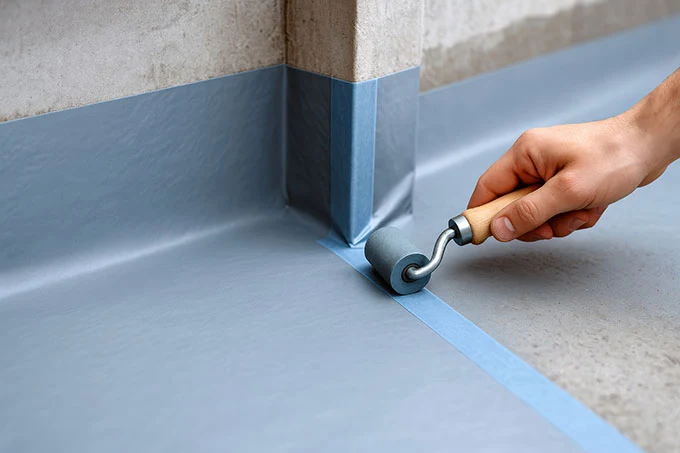
- Sheet membrane waterproofing systems
- Liquid-applied waterproofing systems
- Waterproofing to junctions, penetrations, upturns and terminations
- Tiling, screeding and associated finishes
- Sealant and silicone works
- Painting, plaster repairs and internal water-damage make-good
- Post-installation water testing where appropriate
- Photo documentation, staged reporting and project close-out
Internal and External Waterproofing
Internal waterproofing
Remicon undertakes remedial waterproofing to internal wet areas where failed or inadequate systems are contributing to leaks, moisture damage or deterioration. Depending on the existing construction and investigation findings, works may include bathrooms, laundries, showers and other tiled wet areas. Because we also complete demolition, substrate repairs, tiling, silicone, painting and make-good, the client engages one contractor through the full rectification process.
External waterproofing
External waterproofing requires careful consideration of exposure, drainage, movement, interfaces and termination details. Remicon undertakes waterproofing repairs and replacement systems to balconies, terraces, podiums, planters and other external building elements, with the system selected to suit the substrate, finished surface, exposure and project requirements.
Waterproofing Systems
Remicon is experienced in both sheet membrane and liquid-applied waterproofing systems. We do not force every project into one membrane type. The proposed system is selected around the existing building, access, substrate, programme, finished surface, expected movement, required durability and client budget.
Sheet membrane waterproofing
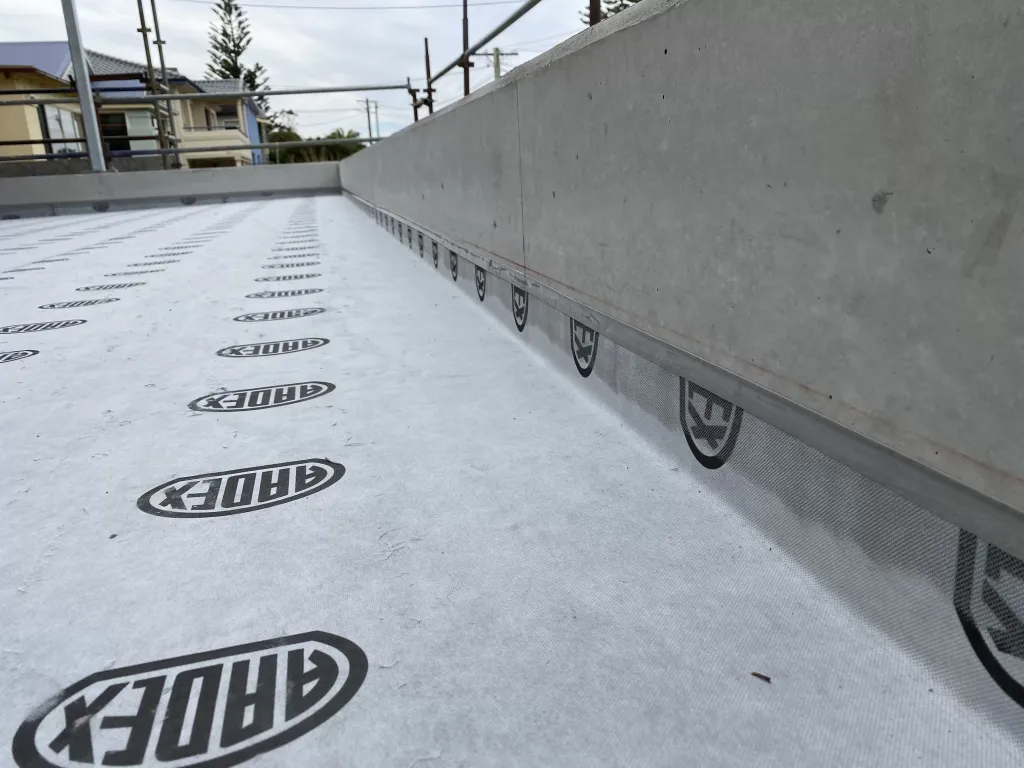
Sheet membranes provide a controlled and consistent membrane thickness and are particularly valuable where a robust, high-performance waterproofing system is required. Remicon's sheet membrane capability includes premium systems such as ARDEX WPM 1000 and WPA Aqualay, subject to project suitability and manufacturer requirements.
ARDEX WPM 1000 WeldTec is a weldable, polypropylene-lined sheet membrane for internal and external non-exposed applications. Its laps and seams are heat-welded, producing a consistent membrane layer beneath tiled or screeded finishes. Current ARDEX technical information identifies WPM 1000 as compliant with AS 4654, AS 4858 and AS 2904, with a consistent 1.2 mm membrane thickness, and states that flood testing, tiling or screeding may commence 60 minutes after installation when installed to its requirements. For remedial projects, WPM 1000 is particularly attractive where the client is seeking a high-end system with controlled membrane thickness, welded seams and compatibility with selected ARDEX tiling systems.
WPA Aqualay, supplied through Bayset, is a flexible sheet membrane with an EBA core laminated with non-woven geotextile fleece. Bayset identifies the system for internal wet areas, balconies, terraces and other tiled waterproofing applications, with tiles, screeds and toppings installed over it to the manufacturer's technical requirements. It is CodeMark certified for internal and external above-ground applications, and its flexible construction provides crack-isolation properties, making it a useful system where substrate movement and finished tiled surfaces form part of the remedial design.
Liquid-applied waterproofing
Liquid-applied membranes remain an effective option across many internal and external applications, particularly where complex detailing, penetrations or geometry make a continuous applied system advantageous. Remicon works with suitable liquid-applied systems from established manufacturers, selected according to the specific application rather than price alone.
Accredited Installation and Manufacturer Involvement
Remicon is currently an accredited installer for ARDEX and Bayset/WPA waterproofing systems. We work closely with product manufacturers and technical representatives so that the selected system, substrate preparation, detailing and application methodology are aligned with the relevant manufacturer requirements.
Where the project and system allow, manufacturer or third-party technical review and inspection is incorporated before critical stages are covered. This creates an additional quality-control layer and provides the client with confidence that the waterproofing has been approached as a complete system rather than simply as a membrane application.
Pre- and Post-Works Water Testing
Where suitable for the building and waterproofing system, Remicon conducts pre-works and post-works water testing. Pre-works testing establishes site-specific evidence and differentiates potential ingress paths before demolition or rectification. Post-works testing provides an additional verification step before final finishes or close-out, subject to the membrane system, curing requirements and site conditions.
Testing may include controlled flood testing, targeted water application, moisture observations and photographic documentation depending on the issue being investigated. The methodology is selected to suit the building and documented so the client receives clear, site-specific results rather than assumptions.
Our Waterproofing Rectification Process
- Investigation and reporting Inspect the affected areas, review visible defects and water-damage patterns, document conditions and determine whether further testing or opening-up is required.
- Water testing and source identification Where appropriate, undertake controlled testing to isolate likely water ingress paths and establish baseline observations.
- Rectification scope and system selection Develop a practical scope covering demolition, substrate preparation, membrane system, interfaces, finishes and testing. Present system options where budget and project requirements justify alternatives.
- Demolition and substrate preparation Remove failed finishes and waterproofing as required, expose the substrate, prepare surfaces and address identified defects included within the scope.
- Waterproofing installation Install the selected sheet or liquid-applied system in accordance with the applicable manufacturer requirements and project details.
- Quality-control hold points Document critical stages and, where arranged, coordinate manufacturer or third-party technical review before the system is covered.
- Testing and reinstatement Undertake post-installation testing after required cure periods, then proceed with screeds, tiles, sealants and associated finishes.
- Internal make-good and close-out Rectify associated internal water damage where included, complete painting, plaster and finish works, provide photo records and close-out documentation.
Waterproofing Solutions Around the Project Budget
Not every building requires the same waterproofing system, and not every client has the same budget. Remicon assesses suitable options ranging from efficient liquid-applied solutions through to premium sheet membrane systems such as ARDEX WPM 1000.
Our objective is not to reduce quality to meet a price. It is to select the strongest fit-for-purpose system available within the client's approved budget, while maintaining appropriate preparation, detailing and workmanship. Where a lower-cost option would compromise the required performance or warranty pathway, we identify that risk rather than simply reduce the scope.
Water Damage, Mould and Internal Rectification
Waterproofing failures result in damaged plasterboard, skirtings, paint finishes, flooring and other internal materials, and prolonged moisture creates conditions conducive to mould growth. Remicon investigates the water source and coordinates the associated water-damage rectification and internal make-good once the source has been addressed.
Where mould is identified or suspected, the required response depends on the extent, affected materials and site conditions. Remicon coordinates appropriate assessment, removal or specialist remediation where required as part of the broader rectification works, so the client manages the waterproofing failure and its downstream damage through one coordinated remedial process.
Why Choose Remicon for Waterproofing in Canberra?
- Remedial-building focus: we investigate why the waterproofing failed, not only how to replace the membrane
- Internal and external waterproofing capability
- Experience with both sheet membrane and liquid-applied waterproofing systems
- Accredited installation capability for ARDEX and Bayset/WPA systems, subject to current manufacturer accreditation terms
- Premium waterproofing options including ARDEX WPM 1000 and WPA Aqualay
- Pre- and post-works water testing where appropriate
- Manufacturer and technical-representative involvement where arranged
- Complete delivery from investigation and demolition through to waterproofing, tiling, silicone, painting and internal make-good
- Staged photo reporting and documented quality-control hold points
- System selection that considers performance, warranty pathway and available project budget
Who We Work With
Remicon provides waterproofing and water ingress rectification services across Canberra for strata managers, owners corporations, commercial property managers, builders, consultants, insurers and private property owners. Our delivery systems are particularly suited to occupied residential and commercial buildings where access, communication, staged works and clear reporting are critical.
Verify before publishing: confirm the exact current wording permitted for accredited installer status and any manufacturer inspection, certification or warranty statements with ARDEX and Bayset/WPA. Do not imply every project automatically receives manufacturer certification.